

Fast, Reliable Attic Insulation Across Lakeland Village
Attic insulation in Lakeland Village usually means a full retrofit, not a quick top-off. Most homes here were built in the 1960s and 70s as lake cottages, and many still have bare studs or a thin layer of deteriorated fiberglass between the joists. That changes the scope, the method, and the materials. Fountain Valley Insulation handles from-scratch cavity fills, air sealing, baffling, and radiant barrier work on the same trip, so you aren’t waiting on a second crew. Call (833) 390-3099 for a free estimate, and we’ll tell you exactly what your attic needs.
Why Fountain Valley Insulation Is Lakeland Village’s Preferred Attic Insulation Company
Lakeland Village homeowners call us because we show up prepared for what these homes actually look like inside the attic. We know the ranch and cottage stock along Grand Avenue, the streets off Lake Shore Drive, and the pockets of 92530 where attics are shallow and wood-frame walls have never been sealed. That local familiarity means we carry what a retrofit needs on the first truck, not a follow-up order.
Nate Calloway, our owner, built the company around a simple idea: match the material to the home, not the other way around. That’s why we stock eight manufacturer brands, including spray foam from Icynene and Demilec, mineral wool from Rockwool, and recycled-content fiber from GreenFiber. Homeowners in Lakeland Village aren’t pushed into one product. We tell you what fits the attic you actually have.
We also understand that a lake cottage retrofit is a different job than a suburban blow-in. Response time to Lakeland Village is quick, and we schedule full-day scopes when the attic needs air sealing and baffling before insulation goes in. Our Attic Insulation team handles blown-in, batts, spray foam, and radiant barrier under one roof, which matters when a single visit has to cover everything.
Attic Ventilation in Lakeland Village
Attic Ventilation in Lakeland Village is the difference between an insulation job that works and one that traps 100°F heat against your ceiling for six months a year. Many of these 1960s and 70s homes have so little attic depth that a previous crew or a well-meaning owner stuffs insulation past the soffit vents, choking airflow completely. The insulation goes in, but the attic gets hotter, not cooler. Ventilation clears the heat so insulation can do its job.
A typical attic ventilation job in Lakeland Village runs $350 to $900, depending on how many soffit baffles need installing and whether we’re adding or clearing existing vents. For homes near the lake where morning humidity lingers, ventilation also helps keep moisture from settling into the insulation overnight.
Baffles Before Blow-In
On a shallow ranch attic, baffles aren’t optional. We install them at every soffit before dense-packing or blowing in material, so air still moves from the eaves to the upper vents. Without that path, a Lakeland Village attic becomes a heat trap even with new insulation above it.
Air Sealing the Top Plates
Older wood-frame cottages have open chases and gaps where walls meet the attic. Hot interior air pours through those openings and undoes what the insulation is trying to do. We seal the top plates and penetrations before any material goes in, which is standard on our retrofits here.
Radiant Barrier in Lakeland Village
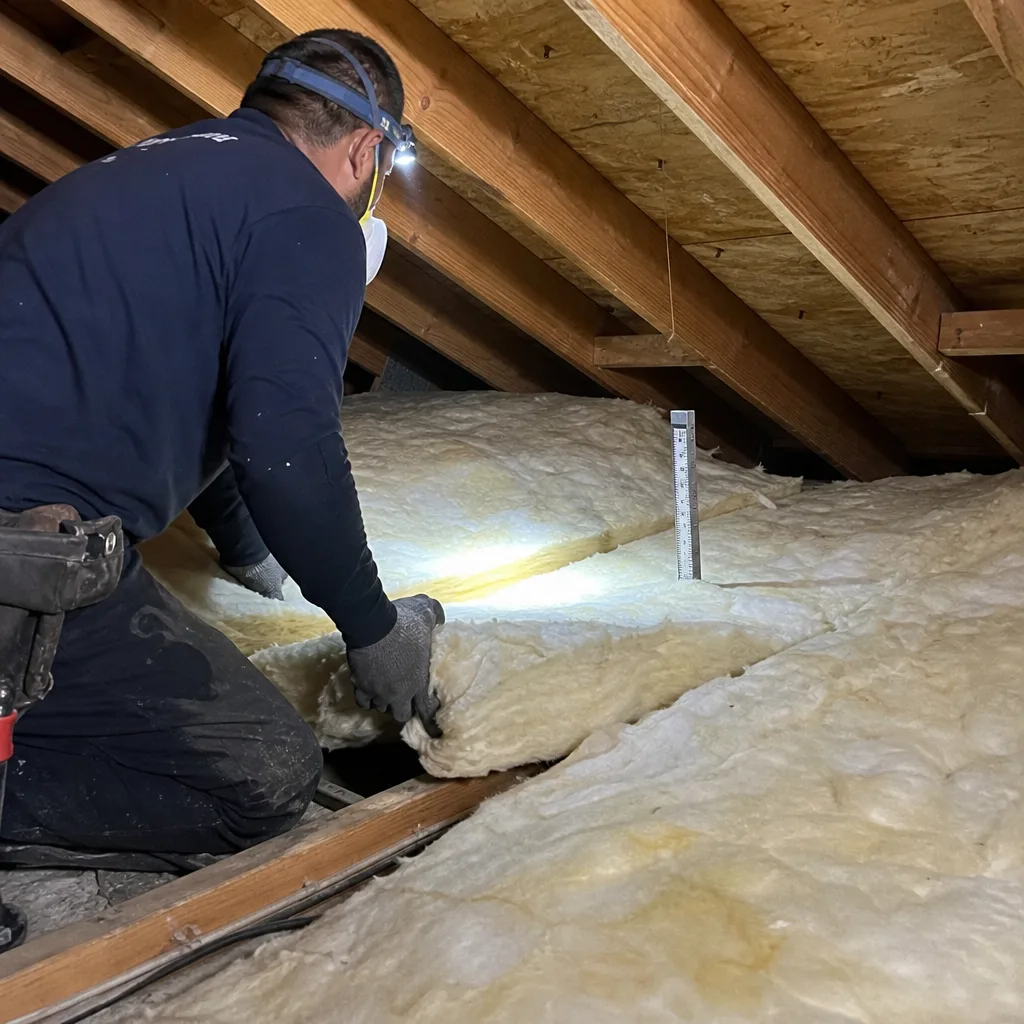
Radiant Barrier in Lakeland Village matters because this is inland Southern California, where summer afternoons regularly pass 100°F and the roof deck turns into a radiator. Insulation slows conductive heat, but radiant heat from the roof surface still bakes down into the living space. A radiant barrier stapled to the underside of the rafters reflects that heat before it ever reaches the insulation layer.
Radiant barrier installation for a typical Lakeland Village attic runs $1,200 to $3,200, depending on roof area and access. For lakefront and near-lake cottages with shallow attic cavities that can’t hold enough insulation to hit modern R-values, a radiant barrier often makes a bigger comfort difference than adding another few inches of fiberglass.
Where It Works Best
Radiant barrier performs best in attics with open rafters and at least a few inches of air space below the roof deck. Most Lakeland Village ranch homes have that, though the tight clearance on cottage attics means we plan staple spacing carefully so the barrier doesn’t rest against the decking.
Pairing Barrier With Insulation
We usually recommend radiant barrier as part of a full retrofit rather than a standalone fix. Sealed top plates, baffled soffits, dense-packed insulation, and a barrier against the rafters is the combination that handles a Lakeland Village summer. One trip, one crew, one attic that finally behaves.
Trusted Brands We Service in Lakeland Village
We carry Owens Corning and Johns Manville for fiberglass batts and blow-in, Icynene and Demilec for closed- and open-cell spray foam, Rockwool for fire- and moisture-resistant mineral wool, and GreenFiber for recycled-content blown fiber. For Lakeland Village customers, that roster means we’re not trying to make one product fit every attic. We stock the materials a lake-cottage retrofit actually needs, and we keep enough on the truck to finish the job in one visit instead of running back to a supply yard.
Common Attic Insulation Problems We See in Lakeland Village Homes
- Bare studs from the cottage era. Homes built as seasonal lake retreats often went up with no insulation at all. We find open cavities under a thin layer of dead fiberglass, which is why most jobs here start with air sealing and a full cavity fill, not a top-off.
- Insulation stuffed past the soffit baffles. Shallow ranch attics invite this mistake. Someone blows in too much material, the eave vents close off, and the attic turns into an oven that radiates into the house all afternoon.
- Open chases and unsealed top plates. On a 1960s wood-frame cottage, the gap where interior walls meet the attic was rarely sealed. Hot air from the living room streams through, and no amount of attic insulation stops it until the chases are closed.
- Old lake-retreat wiring left unsealed. Penetrations from original electrical runs, especially in homes near the water, provide paths for heat and moisture. A quick blow-in skips them. Our crews seal around every penetration before insulation goes in.
Pricing for Attic Insulation in Lakeland Village, CA
Because so many Lakeland Village attics need full retrofits rather than top-offs, pricing reflects the scope. A basic blow-in or batt top-up on an already vented attic runs $1,400 to $2,800. A from-scratch cavity fill with air sealing, baffles, and dense-packed insulation typically lands between $3,500 and $7,500, depending on attic size and access. Adding a radiant barrier runs $1,200 to $3,200 more. If you have a detached workshop or oversized attic access, that’s another line item but rarely a dealbreaker. Call (833) 390-3099 and we’ll price your exact attic, free.
We Also Serve Cities Near Lakeland Village
Beyond Lakeland Village, we run crews to Sedco Hills, Canyon Lake, Meadowbrook, and Wildomar on a regular schedule. If you’re checking your attic while we’re in the area, the same retrofit scope and one-truck approach applies. For more on what we do across the region, see Lakeland Village service areas and the surrounding communities we cover.
Serving Lakeland Village, CA — Our Local Coverage Area
We’re based in the Lakeland Village area and know this community well. Use the map below to see our service coverage — if you’re nearby, we can almost certainly help.
FAQs About Attic Insulation in Lakeland Village
No, and here’s why: blowing loose fiber over bare studs just fills the cavities, but the top plates and chases stay wide open. On a 1968 cottage off Lake Shore Drive, our crew found exactly that, a shallow attic with scraps of deteriorated fiberglass and open chases leaking hot air from the living room. We air-sealed the plates, baffled the soffits, and dense-packed the cavities with Johns Manville before adding a radiant barrier. The homeowner stayed comfortable without a second trip because we carried the whole retrofit on one truck. Call (833) 390-3099 to find out what your cabin needs first.
Often it doesn’t, which is why depth isn’t the only answer. A shallow ranch attic might hold eight inches of fiberglass where modern code suggests twelve or more. In those cases we use higher-density materials like mineral wool or closed-cell spray foam, which deliver more R-value per inch, and we add a radiant barrier to handle the radiant load that extra depth was meant to manage. Your attic may not need more inches, it may need better material.
Insulation slows heat moving through contact, but it doesn’t stop heat radiating down from a 140°F roof deck. A radiant barrier reflects that energy before it reaches the insulation, which matters in Lakeland Village because summer afternoons routinely clear 100°F. Homes near the lake get the same heat with added humidity. The barrier is the piece that keeps the attic from baking the ceiling below it, and it’s standard on our local retrofits.
Yes. We schedule Lakeland Village jobs as full-day scopes when the home includes a detached workshop or a large access hatch, because those spaces take more material and more ladder work. The crew carries enough insulation, baffles, and barrier on one truck to finish the house and the outbuilding the same day. Tell us about the workshop when you call and we’ll plan for it.
We stock Owens Corning, Johns Manville, GreenFiber, Icynene, Demilec, and Rockwool, which means we’re matching material to your attic rather than selling what’s already on the truck. A cold lake cottage with bare studs might get dense-packed fiberglass and a radiant barrier. A shallow ranch with moisture concerns might get Rockwool. Spray foam comes from Icynene or Demilec when the space calls for it. Call (833) 390-3099 and we’ll walk you through which one fits.
Written by Nate Calloway, Owner at Fountain Valley Insulation, serving Lakeland Village and the surrounding 92530 area.