


Fast, Reliable Attic Insulation Across Lake Arrowhead
Attic insulation in Lake Arrowhead is rarely just an energy-efficiency upgrade. In most of these mountain cabins, it’s a correction job. Homes built between the 1950s and 1980s up here typically went in with a thin layer of fiberglass, no baffles, and no meaningful ventilation path, which means heat pours through the roof in winter and ice dams form at the eaves. We handle that full picture: venting, air sealing, and insulation matched to how the home was actually built. Call us at (833) 390-3099 and we’ll walk the attic with you, not just quote over the phone.
Why Fountain Valley Insulation Is Lake Arrowhead’s Attic Insulation Choice
Most insulation contractors in Southern California work flatland track homes. Lake Arrowhead is a different animal. A-frames, vaulted exposed-beam ceilings, pier-and-beam foundations on sloped lots, snow sitting on the roof for weeks at a time. Nate Calloway built Fountain Valley Insulation around the idea that the material has to fit the structure, not the other way around. We carry eight manufacturer brands across blown-in, attic batt, and spray foam methods, so when a Lake Arrowhead attic needs mineral wool for fire resistance or closed-cell foam for an unvented cathedral ceiling, we’re not forcing fiberglass into a job it shouldn’t be in.
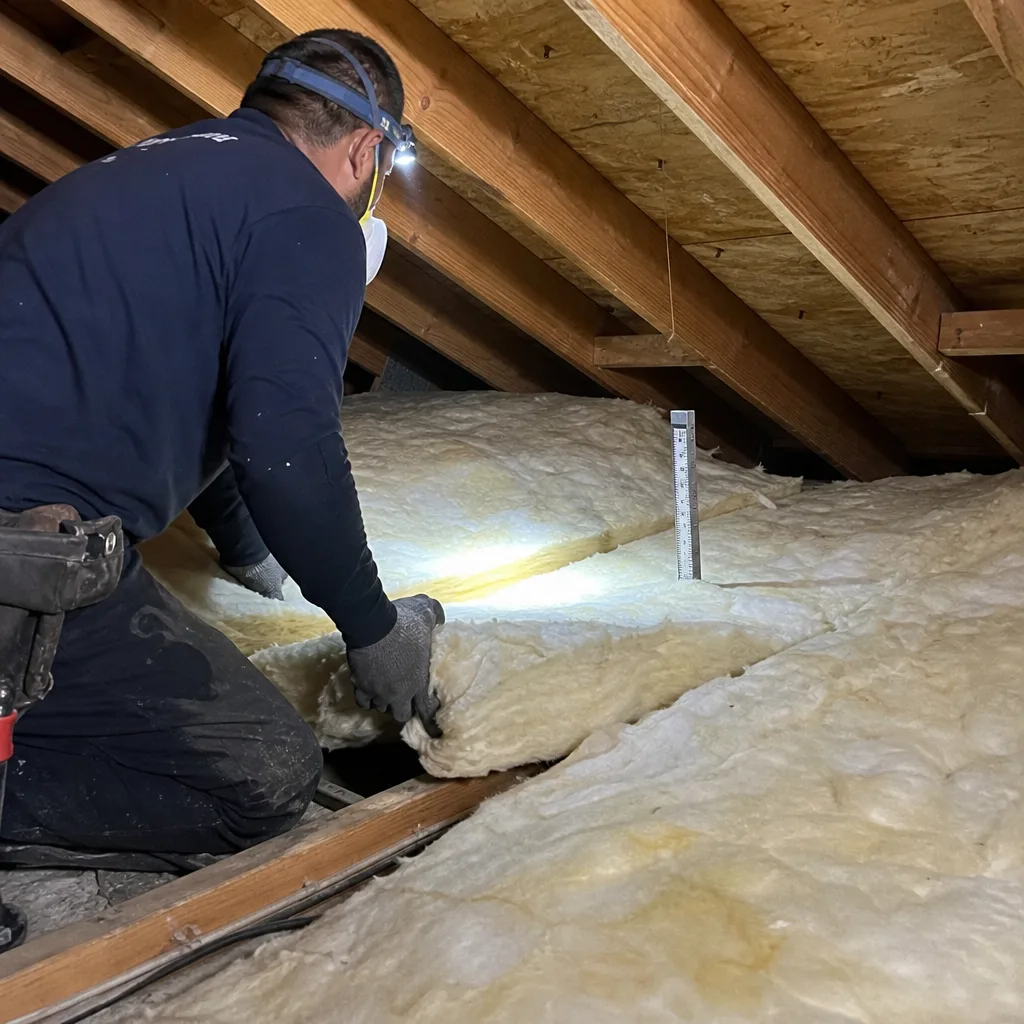
Our Attic Insulation team has spent enough time in mountain cabins to know what a 1960s roof deck looks like once you pull back the old batts. Most of the time, the insulation isn’t the first problem. The airflow is. That’s the part flatland crews miss, and it’s the part that keeps ice dams coming back year after year.
Attic Ventilation in Lake Arrowhead
Attic Ventilation in Lake Arrowhead is the step that should happen before new insulation goes in, and it’s the step most older cabins never had in the first place. A pre-1980 cabin built with no soffit baffles and no ridge vent has one path for warm interior air: up through the ceiling, against the cold roof deck, and out through whatever gaps exist, usually none. That trapped moisture condenses, freezes at the eaves, and you get the ice dams that wreck fascia boards and leak into ceilings.
Correcting the Roof-to-Wall Air Path
We open the soffits, install baffles to create a continuous channel from eave to ridge, and seal the top plates so conditioned air stops leaking into the attic cavity. This is the job that makes insulation actually work in a Lake Arrowhead cabin. Skipping it means any new blown-in material just traps more moisture against the roof deck and feeds the ice dam problem.
What Ventilation Correction Costs Up Here
For a typical 1,200 to 1,800 square foot Lake Arrowhead cabin, adding baffles and restoring eave-to-ridge airflow runs $800 to $1,600, including sealing top plates and clearing blocked soffits. Older A-frames with limited access push toward the higher end. It’s labor-heavy work in tight mountain attics, and it should be done by someone who’s done it before.
Radiant Barrier in Lake Arrowhead
Radiant Barrier in Lake Arrowhead serves a different purpose than down the hill. At 5,100+ feet, the sun is intense and the snow on the roof reflects it back up into the attic. A radiant barrier stapled to the underside of the roof deck blocks a meaningful share of that radiant heat, which keeps attics cooler in summer and slows the snowmelt-freeze cycle that drives winter ice dams.
When a Radiant Barrier Makes Sense Here
The best candidates are south- and west-facing roof planes on cabins with direct sun exposure and vaulted ceilings. If the attic already has baffles and decent airflow, a radiant barrier is a cost-effective add-on. If the ventilation is still wrong, fix that first; a radiant barrier won’t stop condensation if there’s no air path behind it.
Radiant Barrier Pricing in Lake Arrowhead
Installing radiant barrier in a mountain attic typically runs $1,000 to $2,200 for most Lake Arrowhead homes, depending on roof pitch, accessibility, and whether we’re working around existing framing that predates modern code. We’ll give you a firm number after seeing the attic, not a range that balloons later.
Trusted Brands We Service in Lake Arrowhead
We install and service insulation from eight manufacturers, and that matters up here because one brand doesn’t fit every mountain attic. Rockwool mineral wool brings fire resistance and moisture tolerance that fiberglass can’t match, which is relevant in unvented cabins. Icynene and Demilec give us closed- and open-cell spray foam options for vaulted ceilings and rim joists where batts won’t perform. For Lake Arrowhead customers, we keep material available locally and can usually start within a week of a site visit. Ask us why we carry Rockwool and spray foam most competitors won’t stock.
Common Attic Insulation Problems We See in Lake Arrowhead Homes
- Settled 1950s – 1980s batts in vaulted ceilings. The original paper-faced fiberglass in these A-frames has compressed to a fraction of its rated R-value. Topping it up without addressing the sofit air path just seals the problem in, and condensation follows.
- No eave or ridge venting on older cabins. Warm attic air hits the snowy roof plane near the eaves, melts it, and refreezes as ice dams. This is the single most common issue in Lake Arrowhead’s older stock.
- Unsealed top plates and floor penetrations. Many cabins on pier-and-beam foundations sit over open mountain air. Cold air and rodent traffic move up through unsealed gaps at the top plates, undoing the work the insulation should be doing.
- Blocked soffits from years of deferred maintenance. Dust, old insulation, and even bird and rodent nesting plug up the eave intakes. Half the ventilation work we do in Lake Arrowhead is simply re-opening what was never properly opened in the first place.
Pricing for Attic Insulation in Lake Arrowhead, CA
A typical attic insulation job in Lake Arrowhead runs $1,800 to $4,200, depending on the sub-service and the condition of the attic. Blown-in attic insulation for a standard 1,200 to 1,800 square foot cabin usually lands between $1,800 and $2,800. Attic baffles and ventilation prep adds $800 to $1,600. Attic top-up over existing insulation starts around $1,200 to $2,000 if the venting is already correct. Attic insulation replacement, where we remove old material first, runs $2,500 to $4,200 in mountain attics with limited access. Radiant barrier installation is $1,000 to $2,200. Every estimate is free, and we quote a fixed number after a site walk. Call (833) 390-3099 to schedule one.
We Also Serve Cities Near Lake Arrowhead
Our Lake Arrowhead service area includes the surrounding mountain communities of Crestline, Running Springs, and Highland, plus Muscoy down the pass. If your cabin sits just outside the 92352 ZIP, we’ll still make the drive. Mountain attics don’t fix themselves, and we’d rather do the job right the first time than watch another flatland crew miss the ventilation problem.
Serving Lake Arrowhead, CA — Our Local Coverage Area
We’re based in the Lake Arrowhead area and know this community well. Use the map below to see our service coverage — if you’re nearby, we can almost certainly help.
FAQs About Attic Insulation in Lake Arrowhead
Yes, in almost every pre-1980 Lake Arrowhead cabin. The original construction rarely included soffit baffles or a proper eave-to-ridge air path, and blowing insulation over that seals the attic and traps moisture against the roof deck. Venting correction should happen before the insulation goes in, not after.
Only if the ventilation is corrected at the same time. Insulation alone keeps heat in the living space, but without an air path from soffit to ridge, warm air still reaches the roof deck and melts snow at the eaves. The combination of airflow and insulation is what stops ice dams recurring. Call (833) 390-3099 and we’ll explain what your specific roof needs.
Yes. We work on A-frames and vaulted ceilings regularly in Lake Arrowhead. The method depends on the framing depth and whether there’s an accessible attic above. Spray foam is often the right match where batts won’t fit, and we carry Icynene and Demilec for exactly that application.
It helps on south- and west-facing roof planes, especially where the roof gets direct sun all day and the attic runs hot in summer. A radiant barrier also slows the melt-freeze cycle that contributes to winter ice dams. But it should go in after the ventilation path is working, not as a substitute for it.
Usually yes. Batts from the 1950s through 1980s in Lake Arrowhead cabins are typically settled, compressed, and sometimes holding decades of dust and rodent activity. Removing them lets us inspect the top plates, seal air leaks, and start fresh with material at the right depth and density. Call (833) 390-3099 for a free attic assessment; we’ll tell you honestly whether top-up or full removal is the right call.
Written by Nate Calloway, Owner at Fountain Valley Insulation.