

Fast, Reliable Attic Insulation Across Culver City
Attic insulation in Culver City typically runs $1,800 – $4,200 for a standard blown-in retrofit, with shallow-attic bungalows and radiant barrier additions landing on the higher end. We get most Culver City attics insulated in a single day. The real variable isn’t labor, it’s what your attic cavity looks like before we start. If you’re in a 1920s downtown bungalow off Culver Boulevard or a mid-century tract house in Fox Hills, call (833) 390-3099 and we’ll give you an honest read on what your attic actually needs, not what’s easiest to install.
This page is written specifically for Culver City homeowners. The housing stock here, the marine layer, the shallow attics, the knob-and-tube-era walls, it all shapes what insulation approach makes sense. A generic R-value pitch doesn’t work in Culver City, and we’re not going to give you one.
Our Attic Insulation team works in Culver City every week, from the 90230 and 90232 ZIP codes up through the east side. We know which homes need air sealing before insulation, which need ventilation upgrades to handle coastal moisture, and which are fine with a straightforward top-up. That local knowledge changes the recommendation.
Why Fountain Valley Insulation Is Culver City’s Preferred Attic Insulation Company
We match the material to your home, not the other way around. Most insulation contractors in Culver City carry one product line and pitch it to every house they walk into. We carry eight manufacturer brands, so the conversation starts with your attic’s actual condition, then moves to what material fits.
Nate Calloway built Fountain Valley Insulation around a simple idea: homeowners deserve a straight answer about materials and methods, not a sales script. That’s why we carry Rockwool for fire-resistant mineral wool, Icynene and Demilec for closed- and open-cell spray foam, GreenFiber for recycled-content blown-in fiber, and CertainTeed for proven batt and blown-in products. Ask your current contractor why they carry all of those. Most don’t carry any beyond one fiberglass line.
Response time to Culver City matters. We schedule attic jobs across the Westside every week, and we’re not routing crews in from the Inland Empire. When you call (833) 390-3099, you’re talking to someone who knows the difference between a downtown bungalow attic and a Fox Hills tract attic.
Attic Ventilation in Culver City
Attic Ventilation in Culver City is less about preventing ice dams and more about keeping coastal air moving so it doesn’t condense on your roof deck, and we treat it as a required companion to insulation, not an add-on. Culver City’s marine layer means morning moisture and cool evening air, and if you insulate an attic without balancing intake and exhaust ventilation, you trap that damp air against the roof sheathing. We see condensation issues in mid-century Fox Hills and east-side tracts regularly, often after a previous contractor blew in insulation and never touched the vents.
A proper ventilation job in Culver City involves checking what you have first, then correcting it. Most 1920s – 1940s bungalows near downtown have a few passive vents or soffit openings that are partially blocked by old insulation. Mid-century ranches often have ridge vents but not enough soffit intake. The fix is to air-seal the attic floor first, then balance the airflow.
Soffit-to-Ridge Airflow Correction
We clear or add soffit vents, install baffles to keep insulation from blocking them, and confirm the ridge or gable exhaust can actually pull air through. In Culver City’s shallow attics, this sometimes means adding a ridge vent where none existed. The test is simple: air has to enter low and exit high. If it doesn’t, moisture has nowhere to go.
Moisture-Driven Retrofit Ventilation
When a Culver City homeowner calls us after noticing damp spots on a ceiling or a musty attic smell, we look at ventilation before we touch insulation. Adding more insulation over a poorly ventilated attic makes the problem worse. In these cases, correcting airflow comes first, then we bring the attic up to a proper R-value.
Attic Ventilation work in Culver City typically runs $600 – $1,500 depending on roof geometry and what’s already there. It’s the single most overlooked piece of an attic insulation job in this climate.
Radiant Barrier in Culver City
Radiant Barrier in Culver City is a roof-deck foil layer that reflects heat before it soaks into your attic, and it’s especially useful on the south- and west-facing roofs that take direct afternoon sun across the east side and Fox Hills. Culver City doesn’t get Palm Springs heat, but the summer heat spikes are real, and a radiant barrier reduces how much of that heat pushes into your living space. It’s not a substitute for insulation. It works alongside it.
We typically install a radiant barrier as a foil layer stapled to the underside of the roof rafters or as a foil-faced decking product if you’re re-roofing. In Culver City’s shallow attics, it adds heat reduction without consuming the cavity space you need for blown-in fiber or batts.
West-Facing Roof Heat Load
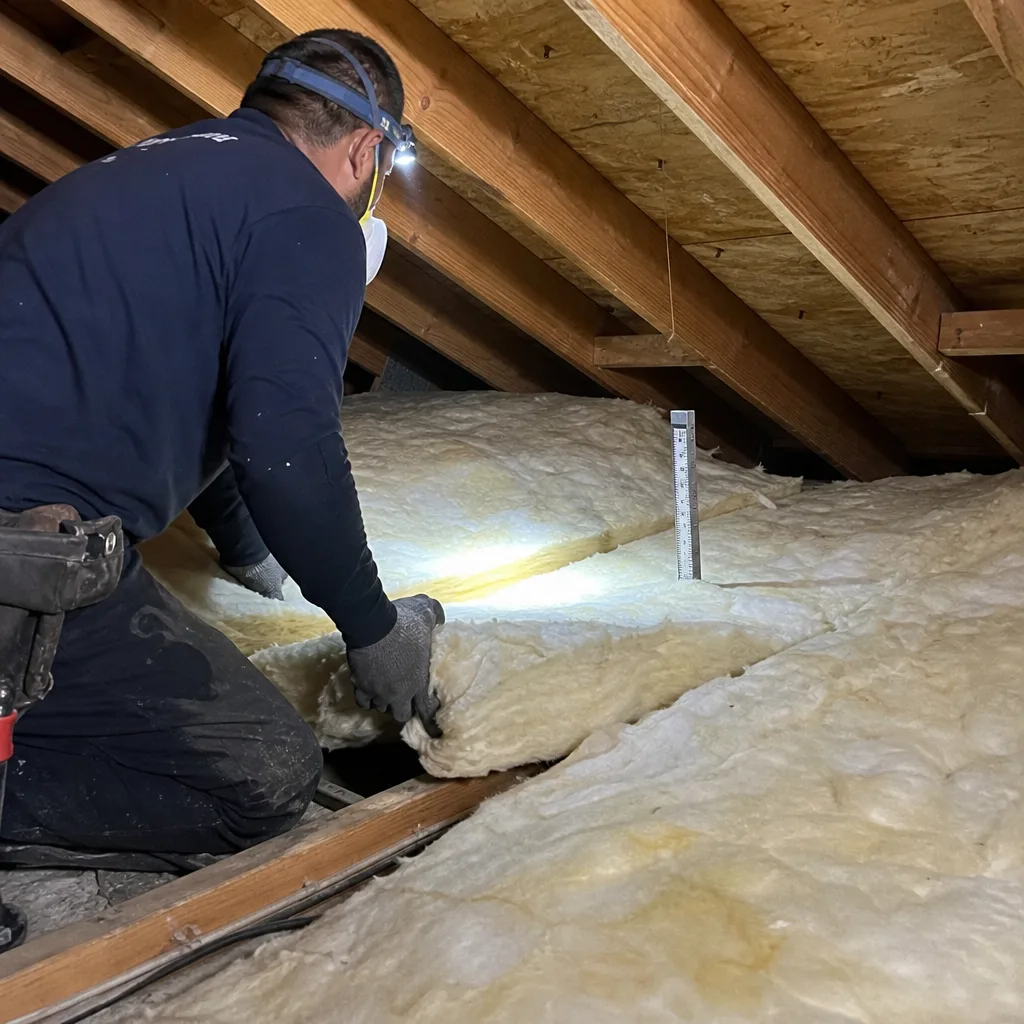
The homes that benefit most are the ones with large west-facing roof planes. When the afternoon sun hits those roofs, the attic can sit 30 – 40 degrees hotter than outside without a barrier. With a radiant barrier installed, that heat gain drops significantly before it ever touches your insulation.
Pairing Radiant Barrier with Blown-In Insulation
If you’re doing a blown-in attic insulation retrofit in Culver City, adding a radiant barrier at the same time costs less than doing it separately later. The barrier handles radiant heat, the insulation handles conductive heat loss on cool marine-layer evenings. Together they cover what Culver City’s climate actually throws at a house.
Radiant barrier installation in Culver City typically runs $1,200 – $2,800 depending on attic size and access. For attics over 1,500 square feet, plan on the higher end.
Trusted Brands We Service in Culver City
We bring genuine material choice to Culver City jobs, and that means carrying brands most local insulation contractors never stock. For blown-in attic work, we install GreenFiber recycled-content fiber and CertainTeed blown-in products. For spray foam, we’re certified to install Icynene and Demilec closed- and open-cell systems. For batt applications, we work with Rockwool mineral wool and CertainTeed fiberglass. We keep material inventory staged for Culver City schedules, so there’s no waiting on a supply house run when your job is underway. When you call, ask us which material fits your attic. If the answer is always the same product regardless of what you describe, you’re not talking to a specialist.
Common Attic Insulation Problems We See in Culver City Homes
- Shallow downtown bungalow attics getting topped off without air sealing: The 1920s – 1940s bungalows near downtown Culver City have shallow attic cavities and original top plates that leak air straight through. A previous contractor may have blown insulation over the top without sealing those penetrations, so marine-layer chill still leaks into the rooms below. Insulation slows conductive heat loss, but it doesn’t stop air movement. The air sealing has to happen first or the insulation underperforms.
- Blown-in insulation trapping coastal moisture due to missing ventilation: We see this in Fox Hills and east-side mid-century tracts where insulation was added years ago but intake and exhaust vents were never balanced. Culver City’s marine layer brings moisture every evening, and without an airflow path, that moisture condenses on the roof deck and eventually creates mold. Adding more insulation to that situation makes it worse, not better.
- Original knob-and-tube-era walls left uninsulated while the attic gets upgraded: Many downtown Culver City bungalows still have empty wall cavities from the knob-and-tube wiring era. Homeowners insulate the attic and wonder why rooms stay cold on cool evenings. The walls are the missing piece. Dense-pack wall retrofits pair with attic work to close the full thermal envelope.
- Single-pane windows and unsealed framing undermining an otherwise good attic job: Culver City’s older homes often have original single-pane windows, especially in the pre-war bungalows. Insulate the attic and the heat loss just finds another path. We’ll tell you when an attic job alone won’t solve your comfort problem, because recommending the wrong scope wastes your money and our reputation.
Pricing for Attic Insulation in Culver City, CA
Attic insulation costs in Culver City run higher than inland markets because the housing stock is older, access is tighter, and the marine layer means ventilation and vapor control are part of almost every job, not an optional upgrade. A standard blown-in attic insulation job in a 1,200 – 1,500 square foot Culver City home runs $1,800 – $3,200. A full attic replacement with air sealing and ventilation correction runs $3,500 – $6,000. Attic insulation top-up over existing but underperforming material runs $1,200 – $2,200. Radiant barrier adds $1,200 – $2,800 depending on roof area. Attic batt insulation in a shallow downtown bungalow runs $2,000 – $4,000. These are real ranges for Culver City’s market, not national averages. Call (833) 390-3099 and we’ll give you a specific price for your attic, not a ballpark from a website.
We Also Serve Cities Near Culver City
Beyond Culver City, our crews work across the Westside and adjacent neighborhoods. We regularly schedule jobs in Ladera Heights, Century City, Venice, and Beverly Hills. If you’re in one of those areas and searching for Attic Insulation in Culver City, you’re in our service zone. Same materials, same crews, same straight answers.
Serving Culver City, CA — Our Local Coverage Area
We’re based in the Culver City area and know this community well. Use the map below to see our service coverage — if you’re nearby, we can almost certainly help.
FAQs About Attic Insulation in Culver City
Culver City’s insulation challenge isn’t extreme cold, it’s the marine layer, condensation control, and evening heat loss combined with daytime heat gain on south- and west-facing roofs. The marine layer means moisture is constantly in the air, so ventilation and vapor control matter more here than in an inland or cold-climate attic. A cold-climate approach that just piles on R-value without addressing airflow will trap damp air and create mold in Culver City attics. Insulation here has to handle cool nights and occasional heat spikes simultaneously, and that changes both material selection and method. Call (833) 390-3099 and we’ll walk through what your specific attic needs for this climate.
Yes, but not with standard batts assuming you have the cavity depth to fit them. The downtown Culver City bungalows from the 1920s – 1940s often have shallow joist bays with limited room for insulation. Blown-in fiber packed into those shallow cavities delivers meaningful R-value in the space available, and dense-pack wall retrofits compensate where the attic alone falls short. We’ll measure the actual depth, air-seal the top plates, and tell you what R-value is achievable without tearing out ceilings. We’ve done dozens of these shallow attics in Culver City and the results are real when the approach matches the cavity.
Not if ventilation and vapor control are handled as part of the job. The risk in Culver City is real: the marine layer brings moisture into attics and walls every evening, and if you insulate without balancing intake and exhaust airflow, that moisture gets trapped against the roof deck or inside wall cavities. That’s why we pair every Culver City insulation job with a ventilation check and, where needed, a soffit-to-ridge airflow correction. Insulation done without ventilation is the single most common failure we see in Fox Hills and east-side tract homes. Call (833) 390-3099 and ask us to check your ventilation before you add insulation.
If your roof is a large south- or west-facing plane that takes direct afternoon sun, yes, a radiant barrier is one of the best dollars you can spend on summer heat reduction. The east-side tract homes in Culver City have roof geometries that catch significant direct sun from mid-afternoon through early evening, and a radiant barrier to the underside of the rafters drops attic temperatures measurably. It does not replace insulation; it works alongside it. You’re in Culver City, and the heat spikes are real even if the winters are mild. We’d recommend pairing a radiant barrier with whatever blown-in insulation you already have or are planning.
Yes, in most cases. A 1940s home in Culver City with uninsulated walls is losing heat through the walls on cool evenings and gaining heat through them during the day. If you only do the attic, you’ll feel some improvement but the house will still be drafty and uneven room to room. Dense-pack wall retrofits paired with attic insulation close the full envelope and deliver the comfort improvement you’re actually looking for. Doing both at once also costs less than doing them separately because the crew is already on site with the equipment. Call (833) 390-3099 for a combined assessment.
Call Fountain Valley Insulation at (833) 390-3099 for a free estimate on attic insulation in Culver City. We’ll tell you what your attic needs, what it doesn’t, and what it’ll cost. No script, no upsell, just a straight answer from a specialist who knows Culver City’s housing stock.
Written by Nate Calloway, Owner at Fountain Valley Insulation, serving Culver City and the Westside.