


Fast, Reliable Attic Insulation Across Calimesa
Attic insulation in Calimesa usually runs $1.85 – $3.75 per square foot for blown-in fiberglass and $3.40 – $6.90 per square foot for spray foam, with most full attics landing between $1,600 and $4,200. We get to Calimesa homes same-day or next-day from our Inland Empire dispatch, and we’re on 92320 roads every week. Call (833) 390-3099 for a straight answer and a free estimate.
What makes Calimesa different from Yucaipa or Redlands isn’t the home style. It’s the heat. Attics here bake at 140°F to 150°F from June through September, and the dry Santa Ana winds pull every bit of moisture out of the air. That combination doesn’t just make your AC work harder. It corrodes garage-door hardware, breaks down old fiberglass batts faster, and turns under-insulated ceilings into radiators pointed at your living room. Nate Calloway built Fountain Valley Insulation around one idea: match the material to the home, not the other way around. For Calimesa, that usually means air sealing first, then insulation.
Why Fountain Valley Insulation Is Calimesa’s Preferred Attic Insulation Company
We’re not the cheapest contractor in the Inland Empire, and we don’t try to be. We carry eight manufacturer brands, Ownes Corning included, because no single product works for every attic in Calimesa. A 1950s ranch off Calimesa Boulevard needs a different approach than a 2010s tract home near the golf course, and a manufactured home on a rural parcel is another job entirely. Our crew works all three in the same week, so we know the difference.
Calimesa homeowners call us after they’ve already spent a summer watching their thermostat climb and their garage-door opener struggle. We show up with options, not a pitch. Blown-in fiberglass for open attics, batts for vaulted sections, spray foam for the garage-to-house boundary and hard-to-reach kneewalls. Nate Calloway leads every estimate, and he’ll tell you when a top-off makes sense and when a full removal is the only honest answer. Response time to Calimesa is same-day for emergencies, next-day for standard estimates.
Attic Mold Removal in Calimesa
Attic Mold Removal in Calimesa is a two-step job: we remove the mold at its source, then we fix the airflow and moisture problem that let it grow. In Calimesa, that source is rarely a roof leak. It’s hot, stagnant attic air meeting cool ceiling drywall, especially in single-story stucco homes where bathroom fans vent into the attic instead of outside. Mold takes hold in the insulation and on the underside of roof sheathing, and it doesn’t go away on its own. A typical Calimesa attic mold removal runs $1,400 – $3,200 depending on square footage and how deep the contamination goes. That price includes containment, removal, antimicrobial treatment, and disposal.
When Calimesa Homes Need This
You’ll smell it before you see it. A musty, earthy odor that gets stronger in the afternoon when the attic heats up. Or you’ll notice black spotting on ceiling drywall near bath fans and can lights. Manufactured homes and older ranch houses on the east side of Calimesa are the most common call-outs, because factory ducting and thin ceiling insulation create exactly the temperature differential mold needs. If you’ve had garage-door corrosion or a failed spring, that’s a clue too: a hot, dry attic is one thing, but a hot, humid attic from a mis-vented dryer or bath fan is where both mold and rust come from.
What Removal Actually Entails
We don’t spray bleach on it and call it done. We bag and remove contaminated insulation, HEPA-vacuum the framing, treat the sheathing, then air-seal the ceiling plane so moist indoor air stops leaking into the attic. After that we install new insulation matched to your home. The whole process takes one to two days for most Calimesa homes, and you won’t be able to occupy the house during the day while we work.
Attic Insulation Removal in Calimesa
Attic Insulation Removal in Calimesa typically costs $1.10 – $2.40 per square foot and is done with a gas-powered vacuum, not a rake. Homeowners need it when old batts have collapsed, rodents have nested in the fiberglass, or a 1960s ranch still has original R-11 that’s doing almost nothing. In a 1,200-square-foot Calimesa attic, expect to pay $1,300 – $2,900 for complete removal and bagging before new insulation goes in. We’ll always show you what we removed and why it failed.
Older Ranch and Manufactured Homes
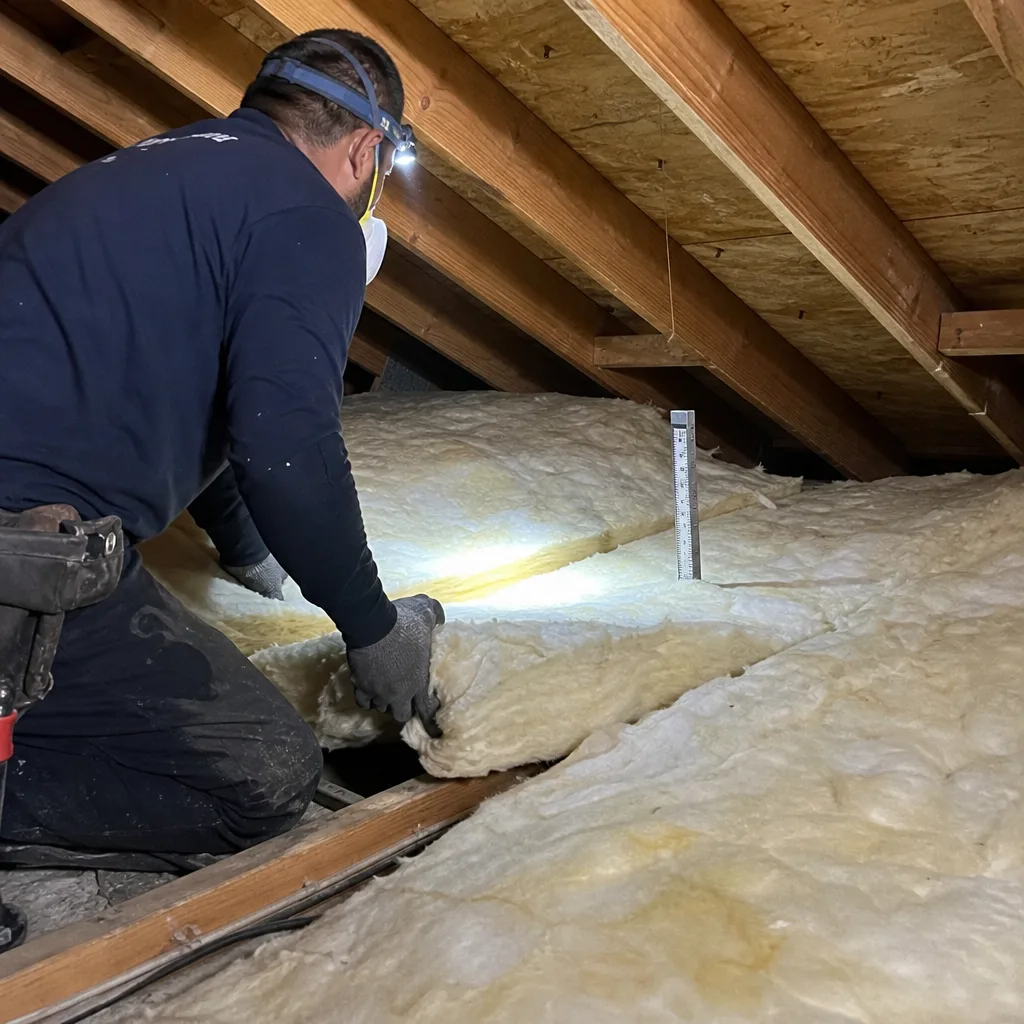
A lot of Calimesa’s older homes still have the insulation they were built with. Thirty, forty, sometimes fifty years old, flattened to half its original depth and full of dust from decades of Santa Ana winds. Removing it is mandatory before topping off: adding new fiberglass over collapsed old batts doesn’t fix the air gap at the ceiling plane. On manufactured homes, we also check the belly board and underbelly gaps while we’re up there, because heat pouring through the floor cavity is just as bad as heat dropping from the attic.
Contaminated or Fire-Damaged Insulation
Rodent droppings, squirrel nests, and old fire damage all require full removal. Leaving contaminated material in place means the smell and the airborne particles keep circulating every time your AC kicks on. In Calimesa’s dry heat, dust from degraded insulation also settles into garage-door tracks and opener chains, which is one more reason we treat removal as its own job rather than a quick prep step. After removal, we air-seal the attic floor, which is where the real energy savings happen.
Trusted Brands We Service in Calimesa
We install Icynene and Demilec spray foam for garage-to-house boundaries and hard-to-reach kneewalls, GreenFiber blown-in cellulose for homeowners who want recycled content, and Owens Corning blown-in fiberglass for open attic top-offs and full replacements. We don’t stock one brand and force it onto every job. Calimesa homes range from mid-century ranch houses to brand-new tract builds, and the right product changes with the roof pitch, the duct layout, and whether there’s a detached unconditioned garage involved. When you call, we’ll tell you which one fits your situation and why.
Common Attic Insulation Problems We See in Calimesa Homes
- Collapsed fiberglass batts in pre-1990 ranches. Original R-11 or R-13 insulation flattens to half its depth within twenty years, especially in the dry heat along Calimesa Boulevard and the older I-10 frontage corridors. A collapsed batt traps no air, so it insulates almost nothing.
- Missing air sealing at the garage-to-house boundary. Attached garages bake at 140°F in July, and that hot air leaks through the shared wall and ceiling into the house. We air-seal this before adding insulation, because bags of fiberglass can’t stop airflow.
- Thin factory insulation in manufactured homes. The mobile and manufactured homes on Calimesa’s rural parcels often have R-11 in the ceiling and large belly-board gaps underneath. Retrofitting the attic and the underbelly makes a bigger difference than a new AC unit.
- Under-insulated vaulted ceilings in newer tract homes. Homes off I-10 near the golf course developments often have exposed-joist attics with minimal insulation above the drywall. Radiant heat pours straight down into the living space, and the fix is either dense-pack or spray foam, not a simple top-off.
Pricing for Attic Insulation in Calimesa, CA
Here’s what you can expect in Calimesa as of 2026. Blown-in fiberglass top-up: $850 – $1,600 for a 1,000 – 1,500 square foot attic. Full removal and replacement with Owens Corning blown-in fiberglass to R-49: $2,400 – $4,200. Spray foam on a garage-to-house boundary or kneewall: $3.40 – $6.90 per square foot of surface area. Attic mold removal with new insulation: $2,800 – $5,500 for a typical single-story home. What changes the number: attic square footage, how much old insulation has to come out, access height, and whether we’re air-sealing before we insulate. Every estimate is free, and we give you a line-item price before work starts. Call (833) 390-3099.
We Also Serve Cities Near Calimesa
Our crews run daily routes through Attic Insulation in Calimesa and the surrounding Inland Empire communities. We handle attics in Yucaipa, Mentone, Redlands, and Banning too, which means we’re already familiar with the local housing stock and climate patterns across this stretch of the I-10 corridor. That familiarity saves you time on the estimate and mistakes on the install. See our full Attic Insulation service details here.
Serving Calimesa, CA — Our Local Coverage Area
We’re based in the Calimesa area and know this community well. Use the map below to see our service coverage — if you’re nearby, we can almost certainly help.
FAQs About Attic Insulation in Calimesa
Calimesa’s dry heat sounds like it should prevent rust, but the real culprit is the temperature cycle. Attics and attached garages swing from 40°F at night to 145°F by late afternoon in summer, and that thermal expansion and contraction plus Santa Ana dust works into hinges and springs. When the garage ceiling isn’t insulated or air-sealed, the heat accelerates the metal fatigue. The fix is insulating and sealing the garage boundary first, then addressing the hardware. We see this pattern constantly in Calimesa’s older ranch homes. Call (833) 390-3099 and we’ll take a look at both the attic and the garage before quoting.
In Calimesa, a radiant barrier delivers more cooling-season benefit per dollar than adding another six inches of fiberglass, because the problem is radiant heat from a 150°F roof deck, not conductive heat loss. A radiant barrier stapled to the rafters blocks most of that heat before it reaches the insulation. But radiant barrier alone won’t fix a house with R-11 or less on the attic floor. The right approach is usually both: air-seal, bring the floor insulation to R-49, then add a radiant barrier if the roof is unshaded and south or west facing. Call (833) 390-3099 for an assessment.
We treat the house attic and the detached garage as separate jobs. On a 1950s ranch, the house attic typically gets full removal of the original insulation, air-sealing around every ceiling penetration, and a new R-49 blown-in install. The detached garage, if it’s unconditioned, usually gets air-sealing at the roof line and light insulation only if you’re using it as a workshop. We were called to a 1960s ranch off Calimesa Boulevard where the homeowner’s garage-door springs had snapped twice in five years, and the attic above the attached garage was hitting 150°F by noon. Our tech found the original R-11 batts collapsed and a rusted-out dryer vent pulling hot garage air into the attic. We removed the failed insulation, air-sealed the garage ceiling with closed-cell foam around the springs and hinges, and topped the house attic to R-49 with Owens Corning blown-in fiberglass. The garage stays 20°F cooler, the springs have held, and the thermostat no longer spikes at 4 p.m.
The right strategy for a 2000s-2010s tract home off I-10 near the golf course is usually dense-pack or spray foam in the vaulted ceiling sections and blown-in fiberglass for the flat attic areas. These homes often have exposed-joist attics with minimal insulation above the drywall, which is why the upstairs rooms bake even when the AC runs constantly. We check each section separately, because a home with vaulted ceilings in the great room and a flat attic over the bedrooms needs two different materials. Icynene or Demilec spray foam handles the vaults, Owens Corning or GreenFiber handles the flat attic. Call (833) 390-3099 and we’ll map it out.
Wait on the mold removal only if the mold is dry, inactive, and contained to a small area. If you’re seeing active moisture, a musty smell, or staining on ceiling drywall, that’s the priority, because the same moist attic air feeding the mold is also feeding the corrosion on your garage-door hardware. Fixing the attic airflow and moisture problem often resolves the garage rust issue at the same time. We handle both in one visit for most Calimesa homes. Call (833) 390-3099 and we’ll tell you what needs to happen first.
Written by Nate Calloway, Owner at Fountain Valley Insulation, serving Calimesa and the Inland Empire.