


Fast, Reliable Attic Insulation Across Altadena
Attic insulation in Altadena typically runs $1,800 to $4,600 for a full removal and re-insulation on a standard 1,200 to 1,800 square foot home, with blown-in fiberglass or cellulose landing on the lower end and spray foam pushing toward the top. Most jobs take one to two days, and we schedule within the week more often than not. If you’re in 91001 or 91003 and your heating bills spike every winter while the upstairs stays cold, your attic is usually the culprit. Call (833) 390-3099 and we’ll come look at it.
We work in Altadena constantly, from the Craftsman bungalows off Lake Avenue down to the mid-century tracts near the San Gabriel foothills. The houses here are different from what you find down the hill in Pasadena. Older, shadier, often with attics that have never been touched since they were built.
Why Fountain Valley Insulation Is Altadena’s Preferred Attic Insulation Company
Nate Calloway built this company around a straightforward idea: carry more material options than anyone else, and match the right one to the house instead of forcing every job into a single product. That matters in Altadena because the housing stock varies wildly from street to street. A 1920s Spanish bungalow off Mendocino needs a different approach than a 1960s ranch near Altadena Drive.
Homeowners here tell us the same things after we finish. Rooms stay warmer in the morning. The heater doesn’t kick on as often. That upstairs bedroom finally holds its temperature. We don’t ask for reviews, but they come in anyway because the difference is noticeable the first night.
Our crews know the streets and canyons. We know that parking a truck on a narrow foothill road off Chaney Trail means walking tools in. We know the attics here often have limited headroom and framing that demands careful material placement, not just blowing insulation everywhere. That local knowledge saves time and avoids mistakes.
Attic Insulation Removal in Altadena
Attic Insulation Removal in Altadena is frequently the first step on older homes where the original material has settled, absorbed moisture from decades of shaded roof exposure, or been contaminated by rodents. We see a lot of this in the 91001 and 91003 zip codes. Many of these houses still have a thin layer of 1940s or 1950s material that’s doing almost nothing.
Removal on a typical Altadena attic runs $1,200 to $2,500 depending on square footage, access difficulty, and whether there’s old knob-and-tube wiring to work around. The job involves vacuuming out the old material, checking what’s underneath, and prepping the cavity for new insulation. On homes near the wildfire interface, we also assess whether existing vents are ember-resistant or need replacement.
What We Look For During Removal
We check for deteriorated wiring, roof leaks, dry-rotted vent framing, and signs of moisture buildup that the old insulation was hiding. In Altadena’s shaded lots, moisture is a recurring theme. Removing old material is the only way to see what’s really going on up there.
When Removal Becomes Necessary
If your attic insulation has been soaked by a roof leak, flattened by decades of compression, or infested by pests, adding new material on top doesn’t fix the problem. Removal gives you a clean start. That’s especially true on homes where the old material is too thin to begin with.
Insulation Contractors in Altadena
Insulation Contractors in Altadena should be able to explain why one material makes sense for your house and another doesn’t. That’s the conversation we have every day. We carry eight manufacturer lines, so there’s no reason to push a single product on every home.
For most Altadena homes, a full attic insulation project including removal, air sealing, and new blown-in material runs $2,200 to $4,600. The variables are attic size, access, whether we’re working around old wiring, and which material you choose. Spray foam costs more but delivers a different result than blown-in fiberglass. We’ll be straight with you about the tradeoffs.
Material Matching, Not Upselling
We’re a multi-brand shop. Owens Corning and Johns Manville for blown-in fiberglass, GreenFiber for recycled-content cellulose, Rockwool for mineral wool, and Icynene plus Demilec for spray foam. Most contractors carry one or two of these. We carry all of them because different houses need different things.
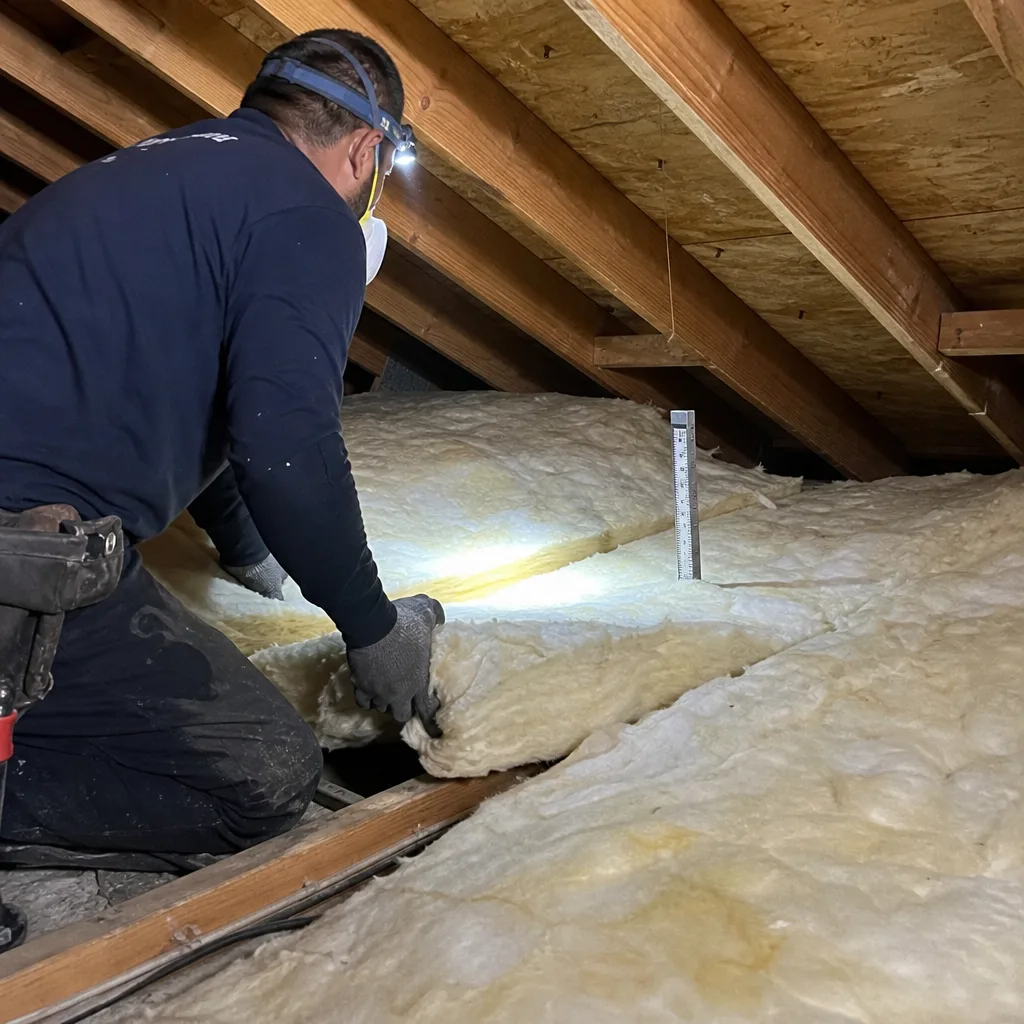
Working In Tight, Older Attics
Many Altadena attics are cramped, with low clearances and irregular framing. That’s not a dealbreaker. It just means the installer needs to know how to maneuver insulation around old wiring and ductwork without compressing it, which kills R-value and creates problems you can’t see.
Trusted Brands We Service in Altadena
We stock material from Owens Corning, Icynene, and GreenFiber specifically for our Altadena jobs, which means we’re not waiting on supply shipments when your attic is opened up and ready. That matters here because so many of these homes are one extreme or the other: either completely uninsulated or carrying material from the Eisenhower administration. If you have a preference, we’ll install it. If you want a recommendation, we’ll give you one based on what your attic actually looks like.
Common Attic Insulation Problems We See in Altadena Homes
- Compressed insulation around knob-and-tube wiring. In homes built before 1940, we regularly find old insulation mashed down around live wiring. Compressed fiberglass loses its R-value, and burying knob-and-tube in insulation creates a fire risk. The fix is careful air sealing around the wiring, not piling more on top.
- Moisture and condensation from deep shade. Altadena’s tree canopy is beautiful, but it keeps roofs damp and cool. In poorly vented attics, that means condensation, mold, and insulation that’s wet and underperforming. We address ventilation and moisture before installing new material.
- Non-ember-resistant vents in wildfire-zone homes. Homes along the foothills and canyon edges fall under defensible-space rules that standard attic vents don’t meet. We replace them with ember-resistant options as part of the insulation job so the whole assembly works together.
- Barely-there insulation in century-old attics. A surprising number of Altadena homes have R-5 or R-10 in the attic, or nothing at all. These houses were built when energy was cheap and insulation was an afterthought. That’s the single biggest driver of cold winter mornings indoors.
Pricing for Attic Insulation in Altadena, CA
Here are the numbers we quote most often in Altadena. Attic insulation top-up on a home with some existing material: $800 to $1,800. Full removal and blown-in replacement: $2,200 to $4,200. Spray foam attic treatment: $3,500 to $6,500. Attic baffles and ventilation prep: $400 to $1,100 depending on how many bays need work. These are real ranges from jobs we’ve done here, not nationwide averages. Every estimate is free, and we’ll give you a fixed price before we start. Call (833) 390-3099 and we’ll schedule a walkthrough.
Factors That Change the Price
Attic square footage, access difficulty, whether removal is needed, material choice, and the condition of existing vents and baffles all move the number. Homes with knob-and-tube wiring take longer because we work carefully around it. Steep canyon lots where we’re hauling equipment up the driveway also add time.
We Also Serve Cities Near Altadena
Fountain Valley Insulation handles Attic Insulation projects across the San Gabriel foothills and surrounding communities. If you’re in Altadena or just over the border in Pasadena, La Cañada Flintridge, East Pasadena, or San Marino, we can usually schedule within the same week. Call (833) 390-3099 with your address and we’ll confirm a window.
Serving Altadena, CA — Our Local Coverage Area
We’re based in the Altadena area and know this community well. Use the map below to see our service coverage — if you’re nearby, we can almost certainly help.
FAQs About Attic Insulation in Altadena
Altadena’s dense tree cover keeps attics cooler and wetter than homes in open neighborhoods, which means insulation here has to handle moisture control as much as temperature control. Shaded roofs don’t dry out as quickly after rain or heavy dew, so attics with poor ventilation hold onto condensation. Wet or damp insulation loses most of its R-value, and the framing underneath can start to rot. In practice, that means we often install or upgrade baffles and vents before adding insulation on heavily shaded lots around Lake Avenue and the canyon streets.
Yes, but it has to be done correctly, which means air sealing around the wiring first and never burying live knob-and-tube under blown-in material. Burying active knob-and-tube in insulation traps heat and creates a fire hazard, so on older Altadena homes we’ll work with you on either updating the wiring or using a strategy that keeps the insulation away from live circuits. We run into this constantly in the 1920s and 1930s houses here. Call (833) 390-3099 and we’ll tell you what you’re actually dealing with.
Rockwool mineral wool is our go-to recommendation for attics in wildfire-interface zones because it’s non-combustible and adds a layer of fire resistance that fiberglass and cellulose don’t provide. For homes that don’t want to pay the premium for mineral wool, we pair blown-in fiberglass with ember-resistant vents and proper air sealing so the attic assembly meets current defensible-space guidance. The vent replacement matters as much as the insulation itself on streets near Millard Canyon and Chaney Trail.
We work in them carefully. Tight attics with low headroom and irregular framing are the norm in Altadena’s Craftsman and Spanish bungalows, not the exception. The key is not forcing material where it doesn’t fit and not compressing insulation to squeeze past ductwork or framing. Compression kills R-value. We send crews who know how to navigate these spaces without damaging the structure or the wiring. It takes longer, but that’s how the job gets done right.
For most Altadena homes we recommend R-49 in the attic, which is the current Department of Energy guideline for this climate zone. That works out to roughly 16 to 18 inches of blown-in fiberglass or cellulose. Homes at higher elevations near the foothills or with particularly cold winter exposure benefit from going slightly above that, while some shaded, well-vented attics can perform fine at R-38 if the house is small and the HVAC is already efficient. We’ll look at your attic and give you a number that makes sense for your house, not just a chart.
Call Fountain Valley Insulation for Attic Work in Altadena
We know this town. We know what’s hiding in these attics. If your home is cold in the winter, too warm in the summer, or you’re just tired of paying for energy that leaks straight through the roof, call (833) 390-3099 for a free estimate. We’ll come out, look at what you have, and give you a straight answer about what it needs. No pressure, no single-product pitch, just the right material for your house.
Written by Nate Calloway, Owner at Fountain Valley Insulation, serving Altadena and the San Gabriel foothills.